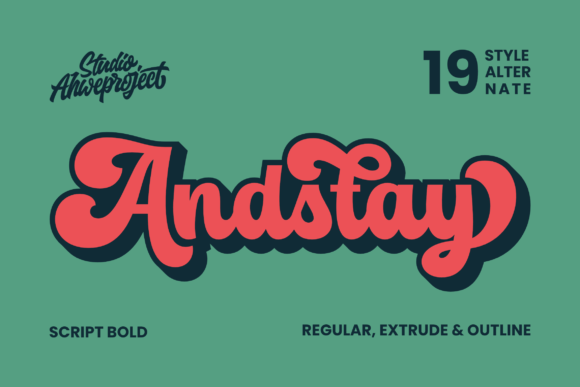
Andstay: A Handwritten Font with Bold Retro Personality
Sometimes a design needs more than just clean lines and modern minimalism. It needs a voice, a texture, a sense of history that pulls the viewer in and makes them feel something familiar yet fresh. That's exactly the kind of energy a typeface like Andstay brings to the table. This isn't your typical elegant script or casual brush font—it's a bold, retro-styled handwritten typeface that practically vibrates with confidence and nostalgic charm. If you've been searching for a way to inject some serious personality into your next project, understanding what this font offers might change how you approach typography entirely.
What Makes This Typeface Stand Out
Andstay reads as strong, confident, and dynamic. Those aren't just marketing words—they describe the actual visual impression you get when you see letterforms built with this kind of weight and character. The strokes have a hand-drawn quality that feels authentic, not overly polished or digitized to the point of losing warmth. There's a retro sensibility woven throughout, reminiscent of mid-century advertising, vintage signage, and the bold graphic design styles that dominated posters and packaging throughout the 1950s and 1960s.
What really sets this creative font apart is its ability to add nostalgic character without looking dated or tired. It bridges that gap between old-school cool and contemporary relevance, which is surprisingly difficult to achieve in typeface design. The letterforms carry enough weight to command attention in headlines and display settings, while the handwritten quality keeps things approachable and human. You're not dealing with a sterile geometric typeface here—you're working with something that has genuine presence.
Where This Font Truly Shines
Think about the projects where you need typography to do more than just communicate words. You need it to set a mood, establish a vibe, or create an emotional connection with your audience. That's where a display font like Andstay becomes genuinely useful rather than just decorative.
Poster and Event Design is an obvious starting point. Vintage-inspired posters for music events, film screenings, art shows, or community gatherings benefit enormously from a typeface that already carries that retro weight. Instead of trying to force a modern sans serif into a nostalgic context, you start with typography that naturally fits the aesthetic. The boldness ensures readability from a distance, while the handwritten quality keeps the design feeling personal rather than corporate.
Social Media Graphics present another strong use case. In a feed full of generic fonts and overused templates, a distinctive handwritten font can stop the scroll. Think about quote graphics, announcement posts, story templates, or promotional content for small businesses. The retro personality of this typeface creates instant visual differentiation, which is exactly what you need when competing for attention on platforms like Instagram, Pinterest, or TikTok.
Apparel and Merchandise Design works beautifully with bold handwritten styles. T-shirts, tote bags, hats, stickers—these products often rely on typography to carry the entire design. A font that already has strong visual character means you need fewer supporting design elements to create something compelling. The retro aesthetic also tends to resonate well with audiences who appreciate vintage culture, streetwear, and independent brand aesthetics.
Building Brand Identity with Character
For small business owners and entrepreneurs developing their brand identity, font selection is one of the most consequential decisions you'll make. Typography communicates your brand's personality before anyone reads a single word of your copy. Choose poorly, and you create a disconnect between what you offer and how you're perceived. Choose well, and your visual communication becomes seamless.
A typeface like Andstay works particularly well for brands that want to project confidence, creativity, and authenticity. Coffee roasters, craft breweries, barbershops, independent record labels, boutique hotels, artisan food brands, creative agencies—these are businesses where a bold retro handwritten font aligns naturally with the brand personality. It suggests craftsmanship, attention to detail, and a willingness to stand apart from competitors who play it safe with default system fonts.
The key is matching your typography choices to your actual brand values and target audience. If your business serves a clientele that appreciates heritage, craftsmanship, or creative expression, a font with this kind of personality reinforces those messages visually. It becomes part of your brand recognition strategy, helping customers identify your materials instantly across different touchpoints.
Practical Tips for Working with Display Typography
Choosing a bold, personality-driven font is only the first step. Using it effectively requires some practical consideration about readability, font pairing, and context.
Readability comes first. A font like Andstay is designed primarily for display use—headlines, logos, short phrases, and callouts. It's not meant for body copy or long paragraphs of text. Reserve it for situations where impact matters more than extended reading comfort. Pair it with a clean serif font or sans serif typeface for supporting text, and you'll create a hierarchy that's both visually interesting and easy to navigate.
Test your font pairings carefully. A strong display font needs a complementary partner. Try pairing this handwritten typeface with a simple sans serif like a geometric or humanist style for body text. The contrast between the expressive display font and the neutral supporting type creates visual balance. Avoid pairing it with other highly decorative fonts, which creates visual competition and confusion.
Consider the context of use. Where will your design be seen? A bold handwritten font that looks fantastic on a large poster might lose clarity on a small mobile screen. Think about the viewing distance, screen size, and medium when deciding how to apply the typeface. For digital applications, make sure the font renders clearly at your intended size. For print, request or create test prints to verify the final output matches your expectations.
Review all included styles and glyphs. One significant advantage of this particular font is its PUA encoding, which means you can access all glyphs, swashes, and alternate characters with ease. This is a practical benefit that many designers overlook. Those extra characters—decorative swashes, ligatures, and alternates—can add another layer of customization to your designs. Spend time exploring what's included in the font package before you start designing. You might discover character options that perfectly suit your project.
Licensing and Commercial Considerations
If you're planning to use this font for commercial projects—which includes anything for clients, business branding, merchandise for sale, or monetized content—pay attention to the licensing terms. Most premium fonts come with specific licensing agreements that outline how the font can be used, whether you need separate licenses for different applications, and any restrictions on modification or redistribution.
For designers working with multiple clients, understanding font licensing is essential. Some licenses cover a single user or single project, while others offer broader commercial use rights. Read the license agreement before purchasing, and keep records of your font licenses organized. This protects both you and your clients from potential legal issues down the road, and it's simply good professional practice.
Final Thoughts on Choosing Typography with Personality
The fonts you choose for your projects communicate volumes about your taste, your attention to detail, and your understanding of visual communication. A typeface like Andstay offers something specific and valuable—a way to bring bold retro energy and authentic handwritten character into designs that need to stand out and connect with audiences on an emotional level.
Whether you're designing a logo for a new brand, creating social media content that actually gets engagement, producing vintage-inspired posters, or developing packaging that jumps off the shelf, having a strong display font in your toolkit gives you options. It lets you match typography to project goals more precisely, create visual consistency across brand touchpoints, and produce professional presentations that reflect the quality of your work.
The best typography choices feel inevitable—like the font was always meant to be part of the design. When you find a typeface that naturally aligns with your creative vision and your audience's expectations, the entire design process becomes more intuitive. That's the real value of investing in quality design assets that expand your creative possibilities beyond the default options everyone else is using.