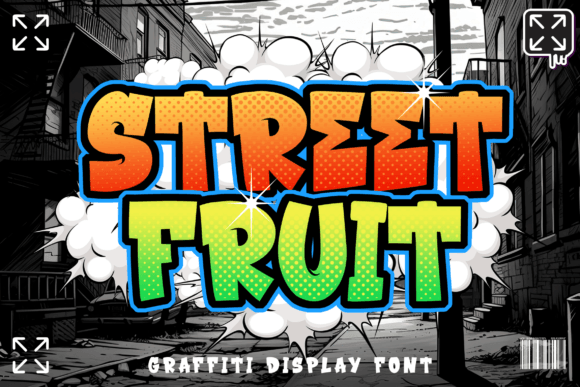
Street Fruit: The Typeface That Brings Urban Energy to Your Designs
Walk down any city street and you'll notice it—the bold, unapologetic marks that tell stories on brick walls, alleyways, and overpasses. That raw energy, the kind that grabs your attention before you even realize what you're looking at, is exactly what the Street Fruit typeface captures. This isn't just another display font sitting quietly in your library waiting to be forgotten. It's a visual statement piece, the kind of creative font that transforms ordinary projects into conversation starters. If you've ever wanted to inject your designs with authentic urban character without crossing into messy or illegible territory, this typeface deserves a closer look.
Why This Grffiti-Inspired Font Works for Real Projects
Let's be honest—many graffiti fonts look cool for about five seconds before you realize they're completely unusable. You try to put them on a logo and suddenly nobody can read the business name. You slap them on packaging and customers squint at the shelf. Street Fruit avoids that trap entirely. Its letterforms carry the boldness and movement you'd expect from street art, but the designer made deliberate choices to keep each character distinct and readable. The strokes have weight and rhythm, the spacing feels intentional, and there's enough consistency across the full character set that you can actually build cohesive designs with it rather than just typing a headline and hoping for the best.
What makes it particularly useful is how it bridges two worlds. It has the visual personality of a premium font built for creative expression, but it doesn't sacrifice the practical considerations that matter when you're designing for commercial purposes. That balance is harder to find than most people realize, especially in the display font category where so many options lean too far in one direction.
Where Street Fruit Actually Shines
Think about the last time a piece of packaging caught your eye from across a store aisle. Chances are, the typography did a lot of heavy lifting. Street Fruit works beautifully for packaging design, especially for products that want to communicate energy, youthfulness, or an independent spirit. Craft beverage brands, streetwear labels, specialty food products, and artisan goods all benefit from a typeface that feels handcrafted but not sloppy.
Logo design is another natural fit. When a brand needs to stand apart from the polished, minimalist aesthetic that dominates so many industries right now, a bold display typeface like this one creates immediate differentiation. It tells people right away that this brand has personality. That said, pairing it thoughtfully matters—more on that in a moment.
Social media graphics practically beg for fonts with this kind of visual punch. When someone's thumb is flying through a feed, you have maybe half a second to stop them. The thick, dynamic letterforms in Street Fruit create that pause. Use it for Instagram story headers, YouTube thumbnails, TikTok overlays, or any digital content where you need text that competes with images for attention.
Posters and event materials benefit enormously too. Music events, pop-up shops, gallery openings, community markets, food festivals—these are all contexts where a graffiti font feels completely at home. The typeface carries cultural associations that signal creativity and authenticity, which is exactly what organizers want their promotional materials to communicate.
Merchandise designers should pay attention here as well. T-shirts, tote bags, stickers, hats—these products live and die by their typography. A well-chosen creative font on a t-shirt can turn a simple design into something people actually want to wear. Street Fruit has the kind of visual presence that works at various sizes, which matters when you're designing for different merchandise formats.
Getting the Pairing Right
Here's where practical design knowledge really comes into play. Street Fruit is a display typeface, which means it's built for headlines, titles, and short bursts of text—not for body copy. Trying to set a full paragraph in a bold graffiti-inspired font is a recipe for frustrated readers. Instead, let it do what it does best: command attention at larger sizes, then pair it with something more restrained for supporting text.
A clean sans serif font makes an excellent companion. The contrast between Street Fruit's expressive character and a straightforward sans serif creates visual hierarchy naturally. Think of it like putting a bold jacket over a simple white tee—each element gets to do its job without competing. Helvetica, Inter, or even a geometric sans serif all work well underneath.
For projects that need a warmer, more personal touch, pairing with a simple handwritten font or script font can work, though you'll want to be careful about visual clutter. Two expressive fonts in the same design often fight each other. The general principle holds: if your headline is loud, let your supporting text whisper.
Some designers also pair bold display fonts with a classic serif font for editorial layouts. This creates an interesting tension between modern energy and traditional elegance. It works particularly well for magazine spreads, blog headers, and digital publications that want to feel both contemporary and sophisticated.
Thinking About Brand Identity
Choosing a typeface for a brand identity project is fundamentally different from picking one for a single social media post. When a font becomes part of how people recognize a brand, it needs to work across dozens of applications and hold up over time. Street Fruit can absolutely serve in a brand identity system, but it works best for brands whose personality genuinely aligns with its character. Think urban lifestyle brands, independent music labels, creative agencies, street food businesses, fitness brands targeting younger demographics, or any company that wants to project confidence and originality.
The key is testing it across real applications before committing. Set the business name in it. Mock up a business card. See how it looks on a website header. Try it on a product label. A font that looks incredible in a showcase preview might feel different when it's carrying the weight of an entire brand system. This testing phase is where good designers separate themselves from the rest—it's not about whether a font is objectively good, but whether it's right for this specific project.
Visual consistency across touchpoints is what builds brand recognition over time. When your audience sees the same typographic voice on your Instagram, your website, your packaging, and your email newsletter, that repetition creates familiarity. Familiarity builds trust. Trust drives business. Typography is one of the most powerful tools for creating that consistency, and having a distinctive display font as part of your toolkit gives you a strong anchor point.
Practical Details Worth Knowing
Before downloading any commercial font, understanding what you're getting matters. Check what styles are included—does the typeface come with multiple weights, or is it a single style? Some premium fonts include alternates, ligatures, or stylistic variations that give you more creative flexibility. These extras can make a significant difference in how versatile the font feels in practice.
Licensing is another area where many people stumble. If you're using a font for a client project, a product you sell, or any commercial application, you need to make sure your license covers that use. Most reputable font designers and foundries are clear about their terms, but it's worth reading the details before you build a project around a typeface. Personal use and commercial use often carry different licensing requirements, and some licenses limit the number of installations or end products.
Readability testing across devices and sizes is non-negotiable for web design and digital products. A font that looks sharp on your 27-inch monitor might fall apart on a phone screen. Test at the actual sizes your audience will experience. Print a sample if the project involves physical materials. These small steps prevent big headaches later.
Consider how the typeface handles different content lengths too. Some display fonts look magnificent with three-letter words but fall apart with longer text. Others handle full sentences gracefully. Understanding these tendencies helps you use the font strategically rather than discovering limitations mid-project.
Making It Work for You
The best typography choices happen when designers match the font's personality to the project's goals rather than just picking something that looks trendy. Street Fruit brings a specific energy—bold, urban, contemporary, slightly rebellious. For the right project, that energy is exactly what's needed. For the wrong project, it would feel forced and disconnected. The skill is in knowing the difference.
Start by defining what your project actually needs to communicate. If the answer involves words like energetic, youthful, creative, bold, authentic, or independent, a typeface like this one earns its place in your design. If the project calls for quiet sophistication, traditional authority, or clinical precision, you'd be better served by a different direction entirely. There's no universal best font—only the best font for what you're trying to say and who you're trying to reach.
Experiment freely, test ruthlessly, and trust your eye. The designers who consistently produce compelling work aren't the ones with the largest font libraries. They're the ones who understand how typography shapes perception and who choose their tools with intention. Whether Street Fruit becomes a go-to in your collection or simply a specialized option you reach for when the moment calls for it, having bold, well-crafted display fonts at your disposal expands what's possible in your creative work.