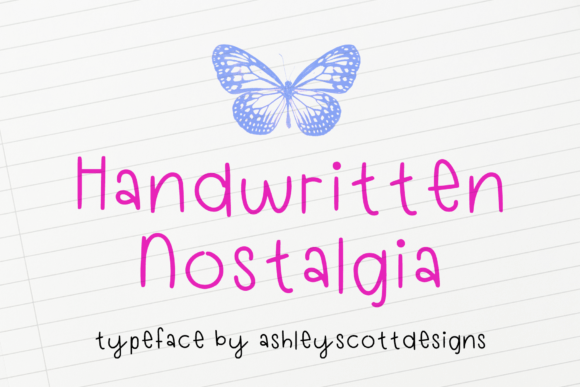
Rediscover the Charm of Analog with Handwritten Nostalgia
There is a specific, tactile quality to a note passed between desks in a dimly lit classroom or the frantic scribbles in the margins of a high school binder. It’s messy, it’s immediate, and it’s undeniably human. In an era dominated by the crisp, vector-perfect precision of sans-serif geometric fonts, we often forget the warmth that comes from imperfection. If you are a designer, a small business owner, or a creative entrepreneur trying to inject some genuine personality into your visual identity, you know that standard system fonts often fall short. They lack the soul required to tell a story. This is where the power of a well-crafted handwritten font comes into play, specifically one designed to evoke a sense of time and place without sacrificing legibility.
Enter Handwritten Nostalgia. This isn't just another generic script typeface; it is a carefully curated premium font designed to transport your audience back to the whimsical charm of the 90s and early 2000s. It captures the aesthetic of diary entries filled with dreams, the doodles of bored teenagers, and the authentic, unpolished look of personal correspondence. For anyone working on brand identity, packaging design, or social media graphics, finding a typeface that feels authentic yet remains readable is the holy grail. Handwritten Nostalgia strikes that balance, offering a creative font solution that feels like a warm hug from the past.
Why Imperfection is the New Perfection in Branding
Modern web design and branding have shifted. We are seeing a massive move away from the "corporate sterile" look of the 2010s toward something more organic. Consumers are tired of being marketed to by robots; they want to connect with the humans behind the brand. This is why display fonts that mimic human touch are seeing a resurgence. When a customer sees a font like Handwritten Nostalgia on a product label or a website header, it subconsciously signals approachability, creativity, and honesty.
Consider the difference between a standard serif font and a script font on a coffee shop menu. The serif might say "professional and traditional," but the handwritten style says "come in, sit down, we’re friends here." For small business owners and entrepreneurs, this emotional connection is vital. It differentiates you from the big box stores. Handwritten Nostalgia allows you to build a brand voice that sounds personal. It works beautifully for bakeries, boutique clothing lines, lifestyle blogs, and artisanal goods because it reinforces the idea that a real person crafted the product with care.
Practical Applications: Beyond the Logo
While logo design is a common use for a typeface like this, limiting Handwritten Nostalgia to just your logomark would be a waste of its potential. A font’s true value lies in its versatility across different design assets. Here is how you can integrate this typeface into your broader visual strategy to maximize engagement and recognition.
- Packaging Design: If you sell physical products, the unboxing experience is everything. Using Handwritten Nostalgia for "Thank You" cards, care instructions, or product descriptions on the label adds a layer of perceived value. It makes the product feel bespoke rather than mass-produced.
- Social Media Graphics: In the endless scroll of Instagram or TikTok, text needs to grab attention instantly. A standard sans serif font can be easy to ignore. However, the dynamic, energetic movement of a handwritten typeface stops the thumb. It is perfect for quote graphics, announcements, and Instagram Stories where you want to mimic the look of a text message or a diary entry.
- Website Design: While you wouldn't use a script font for your main body copy (that would be a readability nightmare), Handwritten Nostalgia serves as an excellent accent font. Use it for pull quotes, call-to-action buttons, or section headers to break up the monotony of standard modern typography.
- Print Materials & Editorial Design: For editorial design, such as magazine headers or book covers, this font creates an instant mood. It is particularly effective for genres like Young Adult fiction, memoirs, or lifestyle magazines. It also works wonders for wedding invitations and event stationery, providing a romantic, personal touch.
Strategic Typography: Pairing and Readability
One of the most common mistakes in graphic design is using a decorative font for everything. Just because a font is beautiful doesn't mean it should carry the weight of your entire paragraph text. Handwritten Nostalgia is a display font, meaning it is designed to be seen in larger sizes. It shines in headlines, titles, and short bursts of emphasis.
To achieve visual consistency and professional presentation, you must master the art of font pairing. Because Handwritten Nostalgia has a lot of texture and personality, it pairs best with something clean and neutral for body text. A simple, clean sans serif font or a classic, legible serif font provides the perfect resting place for the eyes after the excitement of the headline.
For example, imagine a blog post header written in Handwritten Nostalgia. It draws the reader in with its whimsical charm. Then, the body text is set in a clean font like Open Sans or Lora. This contrast creates a hierarchy that is pleasing to the eye and ensures your message is communicated clearly. If you pair it with another overly stylized font, the design will look chaotic and unprofessional, potentially hurting your brand recognition rather than helping it.
Technical Considerations for Creative Professionals
When investing in a commercial font, the aesthetic is only half the equation. As a designer or business owner, you need to ensure the asset is functional. A high-quality typeface like Handwritten Nostalgia usually comes with features that make your life easier.
Look for OpenType features. Does the font include alternate characters? Often, premium handwritten fonts include different versions of letters (like lowercase 'a' or 'g') and ligatures (connecting letters) that prevent the text from looking repetitive. When every letter looks exactly the same, a handwritten font loses its authenticity. Variation is key to mimicking real handwriting.
Furthermore, consider the licensing. If you are a marketer or content creator, you need to know where you can use this font. Can you use it on merchandise for sale? Can you embed it in an app? Always review the license terms to ensure you are compliant, especially if you are scaling your business. A robust license protects your investment and allows you to use the font across all your touchpoints—from your website to your print ads—without legal headaches.
Evoking the 90s Without Looking Dated
Trends are cyclical, and the 90s/early 2000s aesthetic is currently dominating visual communication. However, there is a fine line between "retro chic" and "outdated." The key to using Handwritten Nostalgia effectively is context. It captures the spirit of that era—the playfulness, the DIY attitude—without the pixelation or clashing neon colors that might look kitschy today.
To keep the look fresh, combine the font with a modern layout. Use plenty of white space, high-quality photography, and a sophisticated color palette. This creates a juxtaposition that feels intentional and stylish. For instance, using this font on a minimalist, black-and-white website creates a stunning focal point. It allows the typeface to do the talking while the rest of the design remains sleek and contemporary.
Ultimately, Handwritten Nostalgia is more than just a collection of glyphs; it is a tool for storytelling. It allows crafters, hobbyists, and professionals alike to step away from the rigid constraints of standard corporate typography. It invites your audience to slow down, to remember a time when communication was slower and perhaps a little more thoughtful. By incorporating this font into your toolkit, you aren't just choosing a style; you are choosing to connect on a human level, one stroke at a time. Whether you are designing a wedding invite or launching a new product line, this font provides the perfect bridge between the digital efficiency we need and the analog warmth we crave.