Adisha: The Dance of Typography for Modern Creators
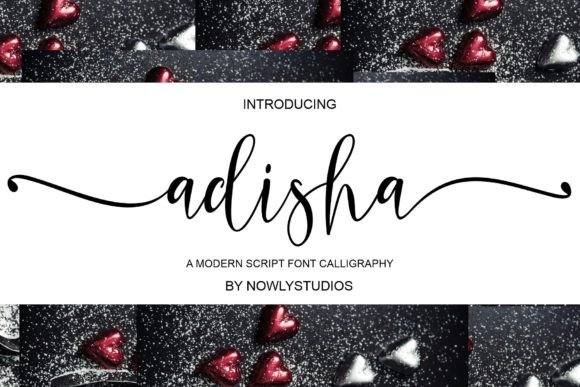
There's a particular moment in design when a font stops being just letters and starts telling a story. That's what happens with Adisha—a typeface that doesn't sit quietly on the page but moves through it, carrying the energy of handwritten notes passed at weddings and the elegance of carefully crafted brand marks. It's the kind of font that makes you look twice, not because it's loud, but because it feels alive.
Where Classic Meets the Unexpected
Adisha occupies a fascinating space in the typography world. It draws from the timeless appeal of script fonts—the kind you'd see on vintage correspondence or artisan packaging—but introduces a modern restlessness that keeps it from feeling dated. The letters have this beautiful inconsistency, a quality that mimics the natural rhythm of handwriting. Some strokes reach upward with confidence while others dip and curve like they're following a melody. This isn't a font that tries to be perfect. Instead, it embraces the kind of imperfection that makes designs feel human.
For anyone working on branding or visual identity, this quality matters more than you might think. We live in an era where consumers crave authenticity. They scroll past anything that feels overly polished or corporate. A typeface like Adisha brings warmth to a logo, personality to packaging, and soul to social media graphics. It whispers rather than shouts, yet somehow that whisper gets heard more clearly.
Practical Applications That Actually Work
Let's talk about where Adisha genuinely shines, because understanding a font's strengths helps you deploy it effectively rather than sprinkling it everywhere and hoping for the best.
Wedding and Event Design: This is perhaps the most natural home for Adisha. The flowing, dance-like quality of the letterforms makes it ideal for wedding invitations, escort cards, table numbers, and event signage. It brings that hand-lettered feel without the inconsistency (or cost) of hiring a calligrapher for every piece. The alternate glyphs and stylistic sets mean you can customize letter combinations to avoid that "template" look that plagues so many event materials.
Brand Identity and Logo Design: If you're building a brand for a boutique business—think florists, bakeries, lifestyle coaches, artisan makers—Adisha offers that distinctive personality that helps a logo stand apart. It pairs beautifully with clean sans-serif fonts for body text, creating a hierarchy that feels intentional. The key here is restraint. Use Adisha for your primary mark or tagline, then let a simpler typeface handle the heavy lifting of readability.
Packaging and Product Design: Small business owners often underestimate how much typography influences purchasing decisions. The right font on a product label communicates quality, care, and attention to detail before a customer even reads the words. Adisha works particularly well for artisan food products, beauty brands, handmade goods, and specialty items where the packaging needs to reflect craftsmanship.
Digital Presence: From blog headers to Instagram graphics, website sliders to email newsletters, Adisha brings visual interest to digital spaces that often feel sterile. It's especially effective for headers and display text where you want to capture attention quickly. Just remember that script fonts like this work best at larger sizes. For body text on screens, always pair it with a highly legible serif or sans-serif font.
Working With Open Type Features
One aspect that separates a premium font from a basic download is the depth of its character set. Adisha includes alternate glyphs, ligatures, and stylistic sets that give you real creative control. These aren't decorative extras—they're tools for solving design problems.
When two letters sit awkwardly next to each other, ligatures smooth the connection. When a word looks too uniform or predictable, swapping in an alternate glyph adds visual interest. The PUA Unicode encoding means all these characters are accessible even in programs that don't fully support Open Type features. Microsoft Word users, for instance, can access alternates through the character map rather than being locked out of the font's full potential.
For designers working in Adobe Illustrator, InDesign, or CorelDraw, the Open Type panel becomes your playground. You can explore different letter combinations, test how words look with various stylistic sets, and fine-tune the typography until it feels right. This level of customization is what transforms a good design into a memorable one.
Making Smart Font Pairing Decisions
Adisha's personality is strong, which means it needs thoughtful companions. Pairing it with another expressive font creates visual chaos. Instead, look for typefaces that complement without competing.
A geometric sans-serif like Montserrat or Futura creates a striking contrast—modern and clean against Adisha's organic flow. For a softer pairing, a humanist sans-serif like Open Sans or Lato offers warmth without rivalry. If your project calls for body text alongside Adisha headers, prioritize readability above all else. Test your pairings at actual sizes, in actual contexts. A combination that looks beautiful in a 24-point headline might fall apart when you're trying to read a paragraph at 12 points.
Consider also the emotional tone you're building. Adisha carries romance, creativity, and approachability. If your brand identity leans toward corporate authority or technical precision, this probably isn't your primary typeface. But if you're in the business of making people feel something—joy, nostalgia, excitement, comfort—then you've found a powerful tool.
Considerations for Commercial Use
Before incorporating any font into commercial projects, verify the licensing terms. A font that works beautifully for a personal blog might have restrictions on merchandise, client work, or digital products. Adisha's licensing covers a range of commercial applications, but taking five minutes to review the specifics protects you legally and ensures your investment serves you well across all your projects.
For designers managing multiple client projects, understanding font licensing isn't optional—it's professional responsibility. Keep records of your font purchases, know what each license permits, and communicate clearly with clients about how typography assets can and cannot be used.
Bringing It All Together
Typography choices reveal more about a brand or project than most people realize. The fonts you select communicate values, set expectations, and create emotional connections before a single sentence gets read. Adisha offers something specific: the warmth of human touch combined with the reliability of professional design. It's a font that dances without stumbling, that feels personal without being sloppy.
Whether you're designing a wedding suite for a couple who wants elegance with personality, building a brand identity for a small business owner who refuses to blend in, or creating marketing materials that need to stop someone mid-scroll, Adisha provides a distinctive voice. The alternate characters and Open Type features give you room to customize and experiment, ensuring your work feels crafted rather than copied.
The best design decisions happen when you understand not just what a font looks like, but what it communicates. Adisha communicates movement, artistry, and attention to detail. Use it where those qualities matter, pair it wisely, and let it do what it does best—turn ordinary text into something worth noticing.